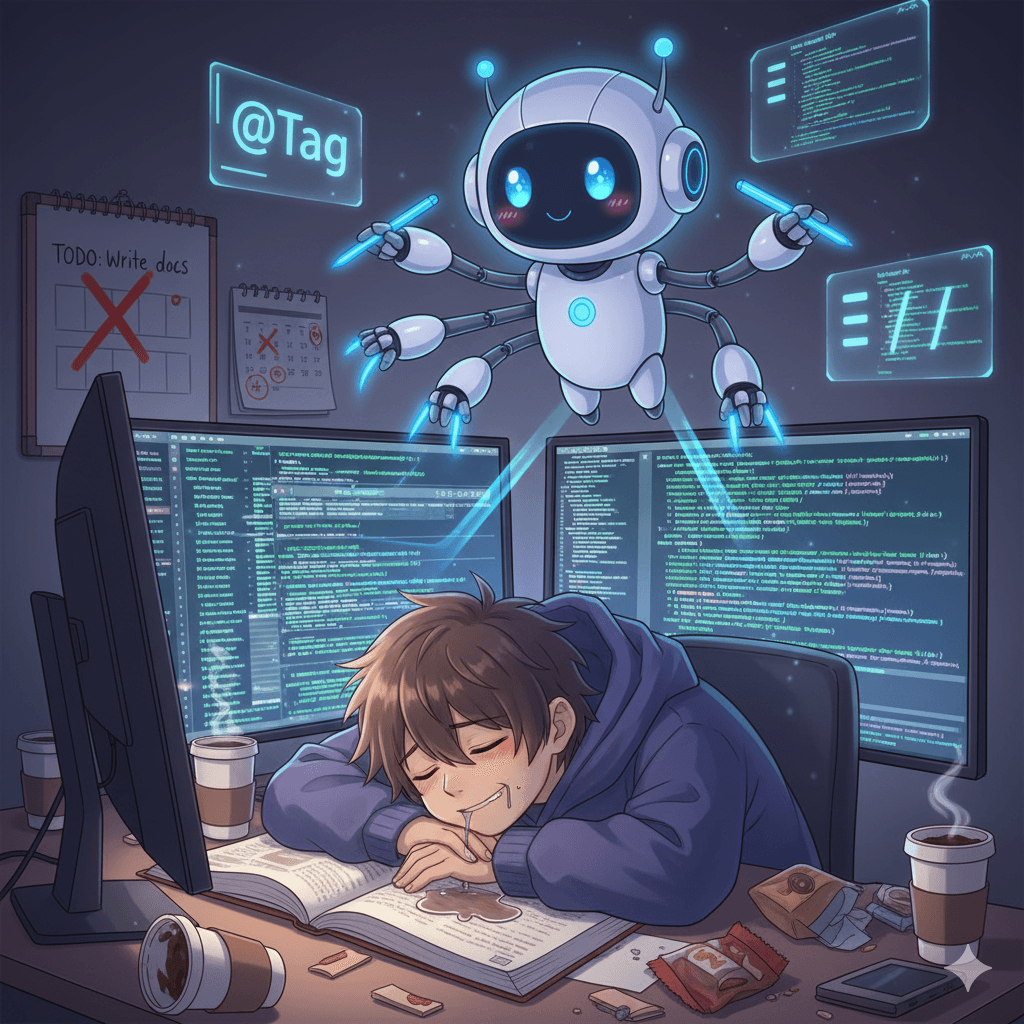
AI Can Think Now: Should We Be Impressed?
How artificial intelligence learned to reason like humans (but without needing chai breaks)

From Parrot to Pandit
Remember when AI was just a fancy autocomplete? Those days are over. Today's AI systems can actually think through problems, just like your neighborhood uncle who has an opinion on everything from cricket strategy to stock market trends—except AI is usually more accurate.
The latest AI models don't just memorize and repeat information. They can reason, argue, and solve complex problems step by step. It's like having a digital version of that brilliant student who always scored 99% in mathematics.
What Does "AI Reasoning" Actually Mean?
Think of it this way: Earlier AI was like those old Nokia phones—reliable but basic. Modern AI is like a smartphone that cannot only make calls but also navigate Bengaluru traffic, translate Hindi to Kannada, and help you argue with your relatives on WhatsApp groups.
These systems can now:
Work through complicated problems step by step
Consider different viewpoints (unlike your Twitter timeline)
Change their minds when shown new evidence
Connect ideas from different subjects
The Amazing Part
AI can now handle tasks that need real thinking, and it's honestly impressive. Need help understanding complex government policies? AI can break them down in simple terms faster than a bureaucrat can say "please wait." Stuck with a coding problem that's been bothering you since Monday morning? AI can debug it and explain the solution clearly.
Startups are already using reasoning AI for incredible applications—from helping farmers predict crop yields to creating personalized learning plans for students in remote areas. It's like having access to a team of experts in every field, available 24/7.
The Not-So-Good News
Here's the catch: AI can now confidently give wrong answers while sounding completely logical. It's like that friend who can convince you that investing all your money in cryptocurrency is a brilliant idea—very persuasive, potentially very wrong.
These systems can build elaborate arguments for completely incorrect conclusions. They've basically learned the Indian art of "making everything sound reasonable" even when it isn't.
Teaching AI to Show Its Work
The biggest breakthrough is teaching AI to think out loud. Instead of just giving answers, modern AI explains its reasoning step by step—like a student showing work in a mathematics exam.
Ask AI to calculate something simple, and you might get a paragraph-long explanation. It's like having that overenthusiastic classmate who explains everything in detail, even when you just asked for the time.
What This Means for Our Future
This is where things get exciting. AI can now handle complex thinking tasks that used to take hours or days. Imagine having a research assistant that can analyze thousands of legal documents in minutes, or a coding partner that helps solve problems while you focus on the creative aspects.
Businesses are already using this to their advantage—from automating customer service in multiple regional languages to helping doctors in rural areas with diagnostic support. It's like having a brilliant colleague who never gets tired and doesn't mind working weekends.
The Limits: Why AI Won't Replace Your Therapist Soon
Despite all this progress, AI has major blind spots:
It doesn't truly understand the real world (try explaining why cows roam freely on highways)
It can't learn from personal experience like humans do
It struggles with emotional intelligence (good luck getting relationship advice)
Small changes in questions can completely confuse it
The Big Questions
As AI gets smarter, we face some serious questions. If machines can think as well as humans, what makes us special? Our ability to get emotional over cricket matches? Our talent for turning any discussion into a debate about politics?
Philosophers are having heated debates about whether AI truly "thinks" or just performs very sophisticated mimicry. Meanwhile, the rest of us are just trying to figure out if we should trust AI to help with our work.
Looking Ahead: The Collaboration Age
We're moving toward an exciting future where AI can think across different subjects with human-like flexibility. This isn't about replacement—it's about enhancement. Think of AI as the ultimate thinking partner that helps us tackle bigger challenges, be more creative, and solve problems we couldn't handle alone.
Imagine AI helping researchers find cures for diseases, assisting engineers in building better infrastructure, or helping teachers create personalized education for millions of students. The possibilities are genuinely thrilling.
The Bottom Line
AI learning to reason is genuinely exciting progress. We've created digital minds that can think, analyze, and solve problems at incredible speed, opening up possibilities we're only beginning to explore. They can't yet appreciate a good Bollywood plot twist or understand why we celebrate festivals with such enthusiasm, but they're becoming incredible thinking partners.
The smart approach? Embrace these thinking machines as powerful tools that amplify human capabilities. Just because AI can reason doesn't mean it replaces human insight—it enhances it. Think of it as having the world's most patient and knowledgeable study partner who's always ready to help.
After all, the best technology doesn't replace humans—it makes us more capable of achieving amazing things.
Written by a human who occasionally asks AI for help but still prefers partner over processing power.